
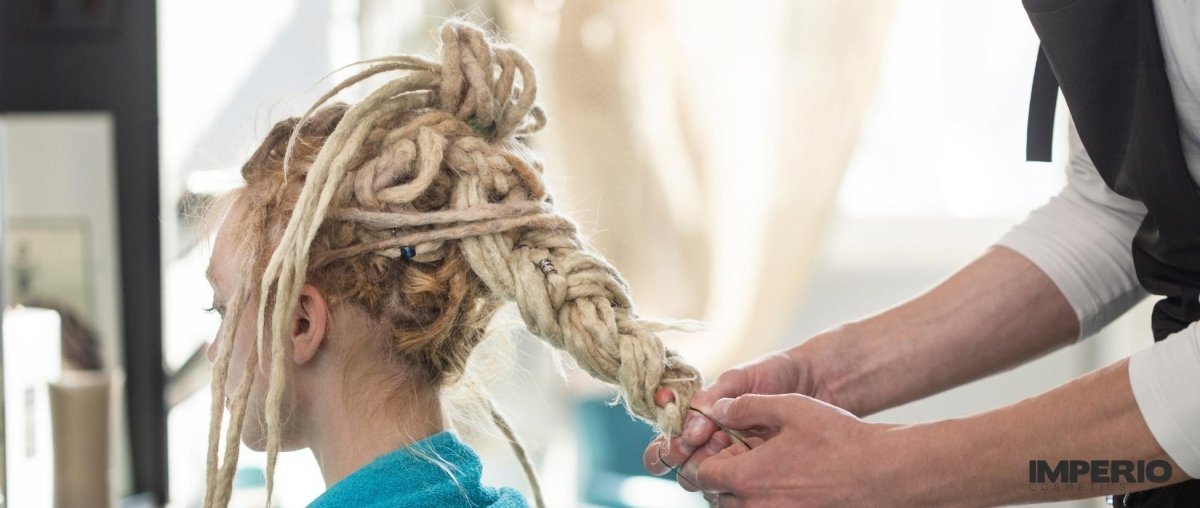
Dreadlocks and rastas are traditional African hairstyles that are now also popular in Europe. In the 1990s, many famous women wore rastas – you may still remember Christina Aguilera's blonde rastas or Beyonce's elaborate braided hairstyles. Almost everyone has heard of them, but very few know the exact difference between dreadlocks and rastas.
It's high time to turn that half-knowledge into expertise!
If you are thinking about getting dreads or rastas but don't know whether they are suitable for your hair or how to care for them, you'll know in a few minutes...
Rastas or dreadlocks – what's the difference?
Everyone looks cool with rastas. And they are easier to care for than you might think. Dreadlocks are an authentic statement hairstyle, but they also require more attention and care than is apparent at first glance. To the untrained eye, both hairstyles look similar at first glance. However, the difference is significant.

How dreadlocks are made
For dreadlocks, the hair is matted strand by strand, and a crochet hook is used to create an even result without loose ends.
Coarse, thick hair is best suited for this. If you have very thin hair, your dreads can be thickened with real hair.
If you want to part with your dreadlocks at some point, you'll have to use scissors.
Advantage: You can then sell your hair. Some people pay a lot for long real-hair dreads because short dreadlocks can be easily extended with them.
Some former dreadheads report that they were able to detangle their hair with plenty of conditioner, a brush, and even more patience. So it is possible, but be prepared for a multi-day manual project.
If you want to get dreadlocks, your hair should be at least 20cm long. Depending on how long your hair is and how thick you want your dreadlocks to be, you should also be prepared to spend a lot of time. Good things take time, and nothing is truer than that when it comes to dreads.
BY THE WAY:
Have you ever heard of natural dreadlocks? In this case, the hair is not manually matted with a comb and crochet hook, but forms on its own by not combing the hair and leaving it alone. The result can look very beautiful and natural. However, with natural dreadlocks, it is difficult to achieve an even diameter for all the strands.
Which method is best?
Every "dread stylist" has a different opinion about which method is best. Which one you choose depends on how much time you want to invest and how the final result should look.
Before you entrust someone with your hair, ask them for a comprehensive consultation and show you photos of their previous work. This is the best way to assess whether the result will meet your personal expectations.
Strand method
The individual strands of hair are twisted and rubbed between the fingers, then divided into two parts and pulled apart. This moves the matted part towards the roots, and the whole process is repeated until the ends are reached.

Backcombing and crocheting
The method with a comb and crochet hook is more common and faster. First, the strand is backcombed towards the roots. Then the protruding hairs are pulled through the matted strand and all around it, so that a smooth, downward-pointing dread slowly forms.
Crochet hook ready
Skilled, experienced hands can crochet dreadlocks without backcombing the hair beforehand. This means the final result does not lose any length.
Wrapping and growing
The strands of hair are wrapped with binding threads and then coated with a thin layer of wax, which must be regularly renewed. Gradually, the strands mat on their own, but it can take months before the binding threads can be removed. This method is rather elaborate and controversial among dreadheads.
By the way:
Rastafari is a religious movement inspired by Christianity that originated in Jamaica in the 1930s. A well-known representative of the faith was, for example, the musician Bob Marley. Rastafarians wear dreadlocks as a sign of their connection to God.
Do dreadlocks damage the hair?
The hair is matted and the surface roughened. This, of course, does not go unnoticed by your hair. Yes, this can cause hair damage. However, this effect is desired, as it helps the dreads hold together better.
Reading tip: How men can best wear long hair

Caring for dreadlocks properly
The dreadlocks must be regularly redreaded (yes, a funny word) or rematted at the roots and restored from time to time so that they do not fray.
Dreadheads also have to wash their hair regularly, but the process is somewhat more elaborate than with loose hair.
Many use Dead Sea shampoo, olive soap, or Castile soap for this. Shampoos that contain silicones are not suitable for washing dreadlocks!
The hair mats best when it is as clean as possible and the hair surface is slightly roughened.
Silicone shampoos coat the individual hairs and make them too smooth, so the roots can no longer be properly rematted. In addition, unwanted silicone microparticles can remain in the dreads.
So a mild shampoo from a natural cosmetics brand is the best choice here.
The dreadlocks should be evenly and sparingly lathered and then very thoroughly rinsed so that no soap residue remains in the hair. Every few months they need a deep cleaning.
After washing, the dreads should be dried as quickly as possible. Otherwise, they can develop unpleasant odors and, in the worst-case scenario, start to mold if they are exposed to prolonged moisture too frequently.
By the way:
If you want to try dreadlocks as a hairstyle but don't want to commit to them, you can have synthetic dreads braided in. They are made of synthetic hair or felt and are attached directly at the roots by braiding them into the natural hair using a special technique.

How rastas are made
The term "locks" is actually misleading, because rastas consist of many small braids. They usually measure between 0.5cm and 2cm in diameter and are braided into the natural hair with synthetic hair.
The ends are sealed with hot water or a lighter. Afterwards, they can be easily undone.
The beauty of it: Even if you currently have short or medium-length hair, you can immediately extend your hair as far as you want with rastas. With natural hair at least 4cm long, the synthetic hair braids can be securely braided in.
Depending on how quickly your hair grows, you will have to undo the braids after 2-3 months and braid them in again.
Braiding in rastas requires patience. Depending on the length and dexterity, hip-length braids can take 8–9 hours.
However, you will save this time in the following weeks when styling your hair in the morning. You get up and your hair is ready. No combing, straightening, or curling.
By the way:
There are also small differences in the method of how rastas are braided in. It is best to make sure that the synthetic hair is not knotted with the natural hair at the roots, because this damages the hair and makes it much harder to undo later.

Do rastas damage the hair?
If the braids are braided in gently, they pose no problem for your hair health.
A small warning from experience: If a few ends of your natural hair stick out from the synthetic hair braid, it is tempting to simply cut off the protruding part. After all, the braids will then look more even and the transition between real and synthetic hair will be less noticeable.
But remember that you will eventually undo the rastas and you won't want to have unsightly jagged ends in your hair afterwards!
You may feel like you are suddenly losing more hair than usual because you are now getting to know every single hair that leaves your scalp.
Normally we hardly notice when we lose individual hairs because they get caught in the brush during daily combing or fall out while washing.
However, the hair you lose during the time you have rastas stays in the braids until you open them. If you wear rastas for three months, for example, you will be confronted with a frighteningly large clump of hair when you comb it out. Don't panic, this is completely normal!

Caring for rastas properly
The braids are braided directly at the scalp with small strands of natural hair.
So you won't have to deal with an oily scalp as long as you wear rastas.
It is enough to wash your hair twice a week or as needed.
To care for your scalp and refresh it in between, there are root sprays with plant extracts, for example with olive or rosemary.
Rastas, and dreadlocks too, exert an unusual pull on your scalp at the beginning. This can be somewhat painful in the first few days and sometimes lead to redness at the roots. Once the braids have grown out by one or two millimeters, however, the pressure subsides. Your scalp will be grateful for a little extra care.
Where can I get dreadlocks or rastas done?
If you want one of these African hairstyles, the hairdresser around the corner will probably look at you funny if you ask for dreadlocks or rastas. You need someone who specializes in these hairstyles and can get them done as quickly, gently, and aesthetically as possible.
Look for an afro shop near you or research reputable providers online. Examples: Dreadfactory or Dreadart.
On classified ad portals, you will find ads from small salons or individuals in the area who have experience with braids or rastas. The same applies here: ask to see photos of their own previous work first and do not settle for random stock photos.
If you have no experience with this so far, you had better not try to make dreads or rastas yourself. Also beware of cheap providers and amateur hairdressers of the "I have braided a braid before and want to earn some pocket money" type. Depending on the effort and length, you should budget between €150 and €350.

By the way:
Senegalese braids can be incorporated with synthetic hair just like rastas. However, they are not braided in, but twisted, which gives them the nickname Twist Braids.
Rastas, on the other hand, are known by the synonym Box Braids.
Conclusion
Now you have properly boosted your general knowledge. Whether as a statement or fashion hairstyle, if you choose rastas or dreads, you can be sure to attract attention.
After all, they are not everyday hairstyles. It takes self-confidence and also a little courage to wear them.
Do you dare?