How can I recognize hair loss caused by iron deficiency?
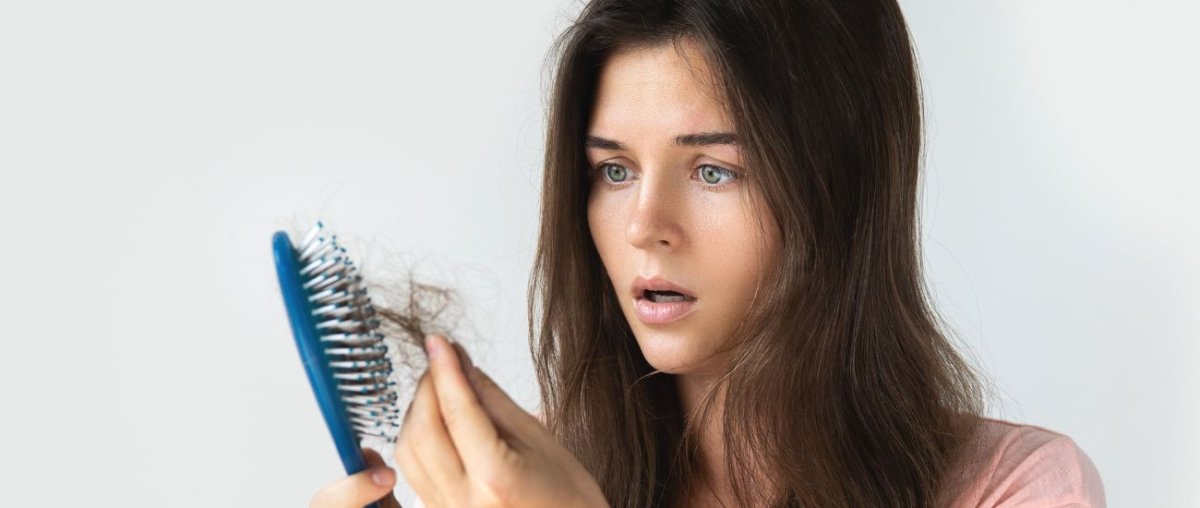
Hair loss caused by iron deficiency is accompanied by other symptoms. First, the hair becomes dull and brittle and is prone to breakage. Then it begins to fall out more frequently. Iron deficiency is accompanied by fatigue, lack of motivation, pale skin, brittle nails, and sometimes also cracked corners of the mouth and cravings.
A blood test can provide certainty as to whether hair loss is caused by iron deficiency. This examines the levels of proteins such as transferrin and ferritin in the blood serum.
These proteins enable the transport of iron in the body. If their concentration in the blood serum is too low, this can indicate an iron deficiency.
How does hair loss caused by iron deficiency occur?

Hair grows continuously, so the cells at the hair follicles are constantly renewing and dividing. As a result, the hair roots must always be supplied with sufficient nutrients, including iron.
If iron deficiency leads to anemia, this further impairs nutrient transport, because the vessels through which the hair root is connected to the bloodstream are very thin and may no longer be sufficiently supplied with blood. As a result, the hair grows more slowly, becomes dull, and eventually falls out.
In addition, the body does everything it can to first supply the vital organs and all muscles with iron. Hair and nails are less essential for survival than, for example, a functioning liver.
If hair loss caused by iron deficiency occurs, urgent action is therefore required to prevent the deficiency symptoms from damaging the body.
There are three possible causes of iron deficiency: Either the body does not receive enough iron, for example due to an unbalanced diet.
Or it has an increased requirement. This affects, for example, pregnant women, blood donors, and people who have experienced an unusually high blood loss, for example due to surgery, after childbirth, or in the case of particularly heavy menstrual bleeding.
The third possibility is that the body cannot metabolize the iron it receives. This can indicate, for example, celiac disease (gluten intolerance), intestinal diseases, kidney dysfunction, or even cancer. Hair loss caused by iron deficiency is therefore reason enough to see a doctor.
What is iron?
Iron is a nutrient that is of central importance for blood formation and for oxygen transport in the body. If there is an iron deficiency, the cells can no longer meet their oxygen requirements. Iron deficiency also leads to anemia.
Iron occurs as a trace element in our food. There are two types:
- Heme iron: Found in meat, fish, and offal
- Non-heme iron: Found in plant-based foods
So-called heme iron can be absorbed better by the body than non-heme iron. Vegetarians and vegans therefore need to consume larger quantities of plant-based iron to meet their requirements.
BY THE WAY: Heme is a component of hemoglobin, which is found in the blood. Heme iron is partially bound to hemoglobin, which is why red meat and blood sausage have a particularly high iron content.
How much iron does the body need?

The iron requirement is approximately 1 milligram per day. However, since only a fraction of the iron present in our food can actually be absorbed by the body, an optimal iron intake of 10-15mg per day is required. For children, an amount between 8 and 10mg is sufficient.
Blood donors, women before and during menopause (especially in the case of heavy menstrual bleeding), and pregnant women have an increased requirement. The German Nutrition Society recommends intake amounts of up to 30mg daily for expectant mothers, as they must also meet the iron requirements of their unborn child.
Even when the body is weakened by infections, blood loss, stress, or radical diets, the requirement is higher.
Foods high in iron
It has already been mentioned that blood sausage, offal, and red meat are rich in iron. However, poultry, lean meat, ham, and various other types of sausage do not have this effect.
Vegetarians and vegans best meet their iron requirements through legumes such as lentils, chickpeas, and beans. Wheat bran, millet and oat flakes, pumpkin seeds, pine nuts, soybeans, and tofu are also suitable.
Green leafy vegetables and native herbs may have a lower iron content, but they also contain vitamins that are necessary to properly metabolize iron.
A balanced diet is therefore particularly important to prevent hair loss caused by iron deficiency!
Coffee, black tea, nicotine, and processed white flour products inhibit iron absorption.
BY THE WAY: The body can absorb iron particularly well in combination with vitamin C. Red bell peppers, cabbage, parsley, and berries such as acerola, aronia, sea buckthorn, rosehips, and lemons are true vitamin C wonders.
Dietary supplements for hair loss caused by iron deficiency?
Iron supplements are available in capsule form or as juice in pharmacies and drugstores. However, when taking them, it should be considered that the body cannot absorb iron well on its own. A complex combination of vitamins and nutrients is needed to optimally metabolize iron, otherwise the supplements will be excreted without effect.
Dietary supplements are therefore only recommended as a supplement to a healthy, vitamin-rich diet. Anyone who also takes medication or other supplements should consult their doctor to rule out possible interactions.
In cases of acute iron deficiency, a doctor can decide to what extent an intravenous iron supplement is appropriate. In this case, iron is injected directly into the bloodstream.
An overdose of iron supplements manifests as diarrhea, vomiting, abdominal pain, and discolored stool, and over a longer period can lead to organ failure. However, iron excess is very rare.
Note: This article contains general information. It is not intended for self-diagnosis and does not replace a visit to the doctor!