
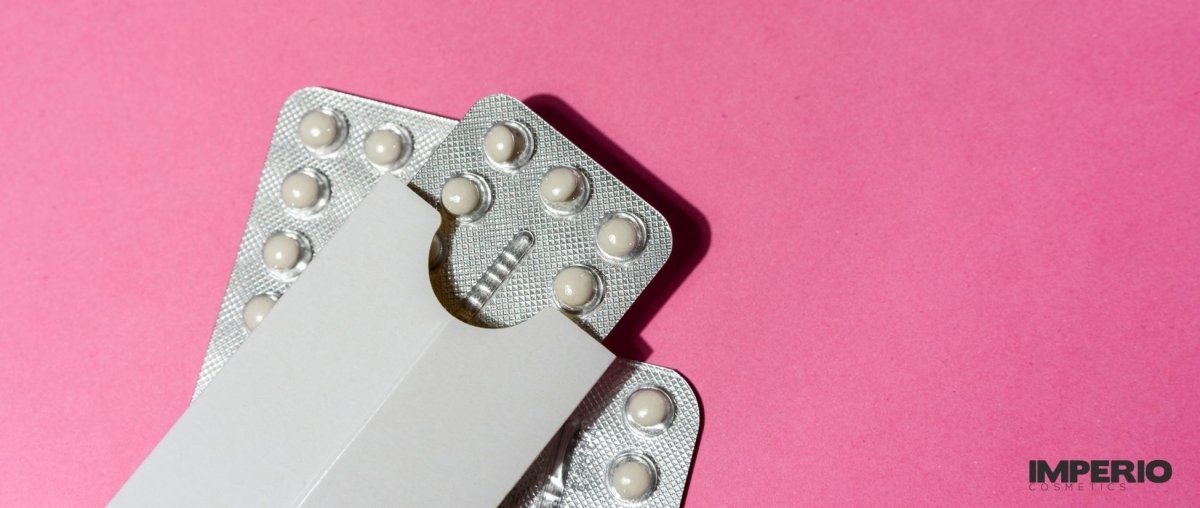
For some women, it starts as early as their mid-20s or 30s: significantly more hair ends up in the hairbrush, and the question arises why this is happening. Do you belong to this group? Then you should ask yourself whether your birth control pill is causing hair loss.
Most women choose this hormonal medication as a reliable form of contraception. However, few are aware that the pill can also have side effects.
In this article, we explain what role the birth control pill plays in relation to your hormone levels and hair growth, and why hormonal contraceptive methods can lead to changes in hair density.
Hormones and hair – how are they connected?
We cannot function without hormones. They are not only responsible for our mood; many processes in our body do not take place without hormones.
This also includes the growth of our hair. In men, so-called androgens are involved in hair growth. In women, estrogen takes on this role. However, hormones produced by the thyroid also affect hair growth in both sexes.

The hormone testosterone causes men to have quite abundant hair growth at times, which also occurs on the entire body. However, it is not exclusively a male hormone. It can also be found in women, albeit in significantly lower concentrations.
Excess testosterone can also lead to reduced hair growth. Therefore, anyone who introduces testosterone-enriched products into their body, for example through anabolic steroids or other muscle-building products, may inadvertently accelerate premature hair loss.
It is not testosterone itself that inhibits hair growth. The effect within the hair follicle has only been proven for dihydrotestosterone (DHT), which is produced from it.
Although DHT makes hair grow faster, it also makes it much thinner and causes it to fall out significantly earlier. To counteract this, blockers of the corresponding testosterone-converting enzymes are used in therapies. This prevents testosterone from being converted into dihydrotestosterone. Unfortunately, the effect lasts for the duration of the treatment.

In women, testosterone has the opposite effect: it promotes hair growth.
This has led to the development of an entire industry. In drugstores and pharmacies, you can buy hormonal products without a prescription that are intended to promote hair growth.
However, you should discuss whether these products will help in your specific case with your treating doctor.
After all, you should find out whether your hair loss is actually caused by hormones and what effects such preparations may have on you.
What does the birth control pill have to do with hair loss?
In fact, the pill promotes thicker hair growth. A reduction in hair growth only occurs when there is a major change in hormone levels, meaning that fewer hormones are introduced into the body.
The same applies to the hormonal IUD and generally hormonal
contraceptives. Hair grows more abundantly for as long as the preparation
is taken. If the treatment is changed or discontinued, the abruptly dropping hormone levels can lead to hair loss.
Anyone who has stopped taking the pill because it is preventing them from conceiving should also read up on possible hair loss after pregnancy.