You've probably already noticed it... In drugstores, shops, and many pharmacies, the shelves for hair care products, such as shampoo, conditioner, and hair treatments, are getting bigger and bigger!
The hair industry is constantly developing new products and active ingredients. They are supposed to help you with all your hair problems. Not long ago, hair treatments were the latest craze. Now, however, a new trend is emerging: hair serum. You've probably seen it somewhere, too, in one of its many varieties: hair serum for dry hair, hair serum for hair loss, vegan organic hair serum with natural ingredients... and so on and so forth.

The countless different active ingredients and areas of application can quickly become overwhelming. They also raise thousands of questions. Hair serum: what is it exactly, is it worth the money, and which one is right for me?
You've come to the right place to find the answers!
Hair serum is a relatively new product. That's why many people don't really know what it's all about. Skin serums have been around for a long time. However, they are considered secondary by the general public - mostly used as an anti-aging product.
Critics also consider hair serum a waste of money. Allegedly, it doesn't do anything that you can't achieve with regular hair care products (such as conditioner). Hair serum for thinning hair, or even for hair loss and similar problems, is particularly controversial.
The best-known active ingredient for this is thiocyn. Some swear by it, while others consider it a complete rip-off. Many other varieties, such as those with caffeine and keratin (the substance that hair is made of), are also controversial:

DIY hair serum, that is, homemade, there are now also many recipes for this. With common household ingredients, you can easily make these sometimes quite expensive products yourself at home - but does it really work? Often, it's not even hair serum, but simply hair oil or hair milk.
You'll find out how you can mix your own hair serum further down in the text!
Are you also wondering what hair serum is exactly and whether you should use it? Then you should definitely keep reading!
Here you'll find everything on the topic of the composition, active ingredients, and application of hair serum.
Hair serum - what is it?
Hair serum is a thick hair care product. It often has an oily or gel-like consistency. It's best to work it into the hair after washing.
You probably want to know how to use hair serum now, right? Then take a look at this overview:
Hair serums are often so-called leave-in products ("leave-in").
That means: you don't wash it out (unlike products such as hair treatments or conditioner). Although there are also some varieties that you use as the last product during hair washing and rinse out after a short application time.
However, the serums that you don't wash out are more recommended. Then the product has time to work on your hair until the next wash.
This is how you achieve the best results - because hair serum is designed to penetrate the hair and work from there in all layers of the hair.
Hair serum should generally be applied two to three times a week to achieve the best effects.
The exact application depends on which product you use and what you want to achieve.
Especially hormone-containing or medical hair serums should always be used exactly according to the package instructions. Because often, with hair serum, less is more!

Hair serum comes in many different varieties. To decide on the right product, you should know exactly what you want to achieve with it.
- Do you have dry, damaged, or thin hair, perhaps even with split ends? Then you should use a moisturizing, conditioning hair serum.
- Do you have curly hair or curls that need special care? A special hair serum developed for these hair types can help strengthen the hair. It also provides a healthy shine and a magnificent mane.
- Do you suffer from hair loss (alopecia), for example due to medication or genetic predisposition? Do you have thinning areas on the crown of your head or at your temples? Is your hairline on your forehead constantly receding higher? Then a growth-promoting hair serum may help you get fuller hair again.
But beware! These products often contain hormones or other highly active substances! That's why you should definitely talk to your doctor before you put any miracle cure on your head!
Are such harsh chemicals too much for you? Then hair powder might be an alternative for you: It simply fills in thinning areas again without affecting your body. You can find more information about it here!
Generally, hair serum improves the appearance of your hair. Depending on the product type, you achieve completely different effects, for example, hair serum can:
- Repair fine cracks in the hair
- Regenerate the rough surface: damaged keratin fibers are renewed
- Help against hair breakage and split ends
- Strengthen and fortify the hair
- Seal the surface and thus create a healthy shine
- Depending on the hair type, provide suppleness and a smoother texture
- Treat your hair more deeply than other products - this is ensured by the long application time
- Protect the hair from damage caused by styling (such as gel, wax, hairspray, and heat)
- Increase the elasticity, allowing you to style your hair significantly better

Overall, almost every hair serum provides soft, healthy hair. This gives you self-confidence - and your hair feels good all day long.
Do you want to learn more details about it? Then definitely keep reading!
Serum or oil?
Many users sooner or later ask themselves where the difference between hair serum and hair oil lies.
Generally speaking, hair oil is a special form of hair serum. You'll find out exactly where the differences lie in the following overview!
Hair serum can be based on water, oil, or silicone.
It can be thick and look like gel, but also thin like water or oil. It is often mixed with dyes and fragrances.
Hair serum often consists of concentrated, highly active substances.
This provides intensive deep care, but can also lead to intolerances. Therefore, it's best to test it on an invisible spot.
Allergic people, pregnant women, and children should avoid concentrated hair serum.
Hair oil is, of course, an oil ;-)
It is thin, very smooth, and has an oily shine. There are natural products that do without added perfumes and colors - they usually smell freshly floral to herbal and look clear to yellowish.
Hair oil has mainly conditioning functions. Since it is oil-based, it can lock water in the hair and thus protect against drying out. It also helps to tame unruly hair and thus simplifies styling.
Unfortunately, it also greases the roots and scalp and weighs down the ends. This causes straight hair to lose its shape more quickly.
It is very well tolerated, especially as a directly pressed natural product.
Attention! Silicones can have beneficial effects on your hair, but also cause exactly the opposite!
Further down in the article, you'll find all the important information about ingredients, including silicones. Be sure to try out whether silicone-containing serums are suitable for you. In the worst case, they can really clog up your hair roots and scalp!
Who | What is hair serum good for?
Generally, anyone can use hair serum if they find their previous hair care products, such as shampoo and conditioner, not effective enough. Hair serums can be a great addition to regular hair care. However, they do not replace other products, such as hair treatments, masks, or conditioner!
It is especially important to be sure what you expect from the hair serum. Basically, there are three types of hair serum:
- Hair serum against hair loss
- Conditioning hair serum, e.g., for damaged or dry hair
- Scalp serum against dandruff and skin irritation (itching, redness, etc.)
Here you'll find out where hair serum works and what you can use it for.

Everyday problems
Hair is heavily stressed nowadays. Daily styling with heat and products such as gel, hairspray, and wax, as well as washing too frequently, affects the hair just as much as coloring and perms. But UV radiation (for example from the sun) and pollutants in the environment also permanently damage the hair.
This often leads to brittle, dull hair without shine. The hair and scalp can both become dry or greasy. Dandruff formation is also not uncommon with a stressed scalp.
This, of course, doesn't look good and can also have worse consequences in the long term. For example, the hair thins faster with age. In the worst case, thinning to bald patches or even hair loss can occur. Of course, this can be genetically determined. But proper hair care can ensure that this process happens more slowly.
You can find all the important information about androgenetically (hereditary) determined hair loss here!
Hair types - Genetic predispositions
As different as people are, so too is their hair. Depending on genetic predisposition and how the hair is handled, it is also completely different in its structure. There are already dozens of different hair colors. But did you know that hair also differs in its cross-section and thickness?
- Hair with a perfectly round cross-section is very straight.
- Slightly elliptical hair is wavy to slightly curly.
- A very strongly elliptical - almost bean-shaped - cross-section is found in curly, tightly curled hair.
The thickness of the hair influences the resilience of the hair and its moldability. Very thick hair is widespread in East Asia. It is often completely straight and offers quite a bit of resistance when bent. Especially if you want to dye such hair, you have to use special products. Professionals, who make wigs, for example, use special methods. Only then can the hair be processed in a way that is typical for its type and suitable for its thickness.

In contrast, "Afro hair", which is very tightly curled, curly hair originating from the Afro-American region, is rather thin and also very sensitive and partly quite brittle.
It requires a lot of care with products developed especially for this hair type. Unfortunately, they are often not available in conventional drugstores.
Do you want to find out what products are available for exactly this hair type? Then it's best to go to an Afro shop (there is one in every larger city) - or you can look online. Let's hope that drugstores and perfumeries will also add more products for Afro hair to their range in the future!
Western and Central European hair is usually somewhere in between in terms of thickness. That means it is usually straight to slightly wavy or curly. And its structure ranges from thin and brittle to thick, shape-retaining hair.
Nevertheless, styling, air pollution, and coloring damage the hair structure both superficially and deep down. That's why you shouldn't skimp on care for this hair type either!
Of course, there are also typical and atypical forms, structures, and thicknesses of hair in all other regions of the earth. Generally speaking: the curlier the hair, the thinner and more prone to breakage it is.
That's why it's important that you know the characteristics of your hair. They are important, especially for:
- the selection of the right hair care products
- your decisions regarding styling and
- changes such as coloring or perms.
Both the moisture and oil content of your scalp and hair are decisive for the right choice of hair care products. Basically, there are four types: normal, dry, oily, or greasy hair, and mixed types.
Where do you fit in? The following overview will help you answer this question!
Dry hair
- low oil/moisture
- itching, redness
- dandruff, split ends
- hair breakage, straw-like feel
- Add moisture
- Anti-dandruff shampoo
- Regeneration, repair
- Take care of your hair and stay away from alcohols and drying substances!
Normal hair
- normal oil/moisture
- healthy shine
- good blood circulation
- normal growth
- Use light products!
- Add nutrients
- Do not grease
- Avoid a lot of heat and cheap hair dye - it dries out your hair!
Greasy hair
- too much oil/sebum
- greasy, oily shine
- stringy hair
- itching, redness
- Oil-free products
- Dry shampoo
- Moisturize!
- Don't add oil or grease and don't interfere with the natural sebum production!
Depending on your hair's structure and which hair type applies to you, you should choose the appropriate hair care products. As a general rule for all hair, you should not wash your hair every day. Dry shampoo that absorbs grease provides a fresh feeling and a pleasant shine without washing important nutrients out of the hair.
BY THE WAY: When washing, you should use a mild shampoo that is pH-skin neutral - that is, it has a pH value of approx. 5.5. Skin is slightly acidic (the so-called acid mantle of the skin against pathogens). Neutral shampoo or alkaline solutions can destroy this protective mantle. This makes it easier for bacteria to enter your body through the skin.
In addition, especially with medium-length to long hair, you should use a conditioner that protects and strengthens the lengths of your hair. Once or twice a week, you can also use a hair treatment or hair mask to additionally supply important nutrients, hair building blocks, and trace elements, thereby repairing, building up, and maintaining your hair.
Finally, you can use a hair serum or hair oil that acts additionally in a concentrated way on the problem areas and strengthens your hair and scalp. Which serum is right for you, you will find out if you read on!
Special properties of hair
As you have already read, hair is individually different - and therefore every head also looks different. The overall impression is naturally determined primarily by the length, color, and structure of your hair.
Where do you see yourself?
Hair serum - What you can achieve with it
Depending on the properties and little problems your hair has, there are different active ingredients that can help you improve your hair.
You can stimulate the growth of your hair and thus take action against thin hair and sparse areas. But beware: Unfortunately, this only works if your hair roots are still intact. Once dead, unfortunately, nothing helps to fill bald spots with hair again.
Shine and suppleness, through which the hair looks soft and healthy, are multiple effects that the serum creates through its deep-conditioning effect.
There is also hair serum for damaged, stressed, and strained hair. Depending on which product you choose, you can thus ensure, for example, that your hair grows back thicker and fuller. Many serums also repair, protect, and strengthen your hair, roots and even your scalp !
Did you know, for example, that there is hair serum with liquid hair building blocks? If you want to learn more about this, be sure to read on! (Small tip: The magical substance is called keratin!)

Diseases
Hair loss that is not genetically determined - so-called androgenetic alopecia - is often caused by diseases or medications. This cannot be prevented in most cases. Nevertheless, there is hair serum against hair loss... how does that work?
Right off the bat: There are no scientifically sound studies that deal with the effectiveness of such serums. How much hair serum actually helps with hair loss is therefore controversial.
However, it is certain that there are manufacturers who claim that their hair serum helps against hair loss. Behind some of them are large scientific research projects that have dealt with active ingredients for more hair growth for years. These products have also helped some patients, provided you can trust customer reviews online.
In any case, you must still have healthy hair roots. Once they have gone into "retirement", there are only two solutions for you: a hair transplant, or you develop a magical potion ;-) Hair serum for hair growth will then no longer be able to do anything... It only stimulates the hair roots and unfortunately does not form new ones.
No matter what you want to try: Under no circumstances should you do it alone. Be sure to talk to your doctor about the product you want to use. Especially hair serum with hormones or strong chemicals can influence the effectiveness of your actual treatment - and the last thing you want from this is to become even sicker.

Even if you are currently undergoing chemotherapy, you should clarify with your doctor whether the hair serum can help at all.
As a rule, the hair roots are so heavily stressed here that no hair serum in the world has a chance to do anything.
It is better then to grab the conventional wig, the cap, or completely shave it off and show yourself without hair. The fact is: You are fighting for your life here. That is more beautiful than any hair splendor in the world!
Medical procedures
Do you have a scar on your head, perhaps from an injury, surgery, or a burn wound? No hair grows on scar tissue. Especially in larger areas, this often leads to unsightly bald spots. The only solution here is usually: Abrasion. But a buzz cut or a smooth-shaven bald head is not everyone's taste. Is there perhaps another solution?
Hair serum for more hair growth - that often sounds like an easy solution, especially in scarred areas. But: unfortunately, that does not work. Scar tissue contains no hair roots. Instead, it is only intended as a connection between two pieces of skin. Therefore, no hair can grow on it.
You can either go to a special clinic. There, your own hair will be transplanted. Alternatively, you can also use hairpieces, toupees, or wigs. But that is only worth it if the affected area is very large or you shave off the rest of your hair for it. Especially in summer, this can very quickly become a wet affair.
If you are interested in the topic of hair transplantation, then take a look here!
Hair serum ingredients
With the huge amount of hair care products and especially hair serum types that are available to buy, a large amount of different active ingredients is obvious. In fact, there are almost countless ingredients that are in different interactions with each other. There are again in several concentrations and in different products, which all smell and look different... clear, where the flood of hair serum comes from.
And what of that is now good for me? That is now certainly the question that has arisen in your head. Here you will find all the important ingredients explained briefly and concisely. This helps you understand which hair serum is suitable for your hair. Only then can you make your hair full and healthy and also maintain it! Well, curious? Then be sure to read on!

Keratin
Everyone who has ever dealt more intensively with hair probably stumbles over the term. In principle, keratin is the basic building block of hair. That means, above all the outer scale layer - the protective shield of every hair - consists of it. But also the inner areas are built from keratin fibers.
If you are more interested in the structure of hair, then it is worth reading this blog post!

With damaging influences from the outside, the scale layer is attacked and in the worst case destroyed. This happens especially with bleaching and perms, but also with too much heat, when you glue your hair with styling products or when you dye it too often.
That means in reverse: Damaged areas usually lack keratin.
The consequence: dry hair, split ends (broken ends) and breakage points, as well as unruly hair that can no longer be styled nicely and within seconds turns into a ball of frizz.
Now, of course, no one wants a bird's nest on their head. So what to do?
So-called Repair Hair Serum can help you deal with dry, brittle, and broken hair. It contains liquid keratin, which rebuilds and repairs the natural structure of your hair.
The effect is only clearly visible through regular application of hair serum with keratin. You should therefore pay attention to the manufacturer's recommendation and use the product as stated (for example, twice a week).
Silicones
You probably know silicone from various areas: from construction to breast enlargement, it has thousands of applications. And that is supposed to go into your hair now? The answer is yes and no
Positive: Silicone provides suppleness, smooths the scale layer of the hair and makes your hair incredibly shiny. That is why it is often used in the treatment of real hair for wigs that was heavily damaged by bleaching and dyeing.
But: That is unfortunately not all. Silicone clogs hair. Precisely because it smooths the scale layer, it unfortunately fills all the unevenness in the hair surface, even the desired ones. This makes the hair absorb care partially much worse - regardless of whether surface or deep care. Color and bleaching can also not work as expected. The result can be patchy, or not intense enough.
Therefore, you should think carefully about whether you want to use a hair serum on a silicone basis. The middle ground: Use the hair serum with silicones alternately with a silicone-free serum and completely refrain from it shortly before you want to dye your hair!
Caffeine
Do you like drinking coffee, mate, or energy drinks? Then you are surely more than familiar with the invigorating and stimulating effect of caffeine. That it can work not only in the head, but also on hair, is claimed by many manufacturers who offer caffeine-containing hair products.
Especially in old age, many people suffer from:
- Hair loss, thinner hair, and bald spots
- Thin and brittle hair
- A slowed regeneration process
So it is only logical to look for products that counteract this!
Hair serum with caffeine stimulates the hair roots and thus ensures that the process of hair formation happens faster. It promotes blood circulation and thus the nutrient supply of the scalp. The microcirculation of the cells, i.e., the internal cycles, can caffeine also stimulate and thus act against hair loss.

Sounds good, but does it actually work?
Well... that is the thing. Caffeine as an active ingredient on the head is controversial. You can generally not expect really intense results. And whether anything happens at all varies from person to person.
That means for you: Try it out. There are many shampoos, conditioners, and hair serums with caffeine. So if you think that hair serum with caffeine is the right product for you, then it is certainly not wrong to test its effect on your head.
BY THE WAY: Many products also have sample and travel sizes. This way you can find out without major investments whether your morning coffee might belong on your head in the future.
(Warning: Burn hazard! We strongly advise against freshly brewed coffee in the shower. Better treat yourself to a hair serum with caffeine, that is guaranteed not to be hot anymore.)
Thiocyn
Thiocyanate - that is the active ingredient behind one of the newest miracle cures. It is formed by your body as well as taken up through food. Thiocyn acts like a pick-me-up for all cells, regardless of whether they are from humans, animals, or even plants. It promotes their activity, no matter which one it is. So it can activate proteins and enzymes, stabilize the cell membrane (i.e., the "outer skin" of the cell), and stimulate the cell metabolism.
Effect
Thiocyn does not act like a medication in the conventional sense here. It does not influence the organism at a specific point, but rather helps to bring all functions back to a normal level. This also means that it balances over- and under-functions.
According to the University of Greifswald, where Thiocyn was first researched, it can be used in countless places on the body.
- On the skin, it helps against itching, redness, and irritation.
- It promotes wound healing.
- In men, it positively influences sperm formation.
- The immune system is more powerful with a higher thiocyanate level in the blood and can act faster against pathogens.
- It protects the organism from toxic substances.
- Plants improve their resistance against microorganisms and toxins through thiocyn addition.
FUN FACT: In earlier times, Eastern European farmers had their cattle lick their scalps. Especially with skin irritation from the sun and with hair loss, this had a stimulating effect - because of the high thiocyn content in the saliva of cattle! So that you do not have to get a cow especially for your hairstyle now, there are of course also thiocyn-containing hair care products ;-)
About three years ago, the University of Greifswald introduced a thiocyanate hair serum. This is supposed to act especially on the hair root by activating its cells and strengthening them in their function. This lowers the susceptibility to external influences. So the serum protects the process of hair growth, which otherwise might only happen slowly or not at all anymore.
In this way, Thiocyn is supposed to actively counteract hair loss and slow it down or stop it completely.
Since Thiocyn is water-soluble, it is washed off the scalp by regular hair washing. The serum is supposed to compensate for this loss as well.
Side effects

Thiocyn is a body-native molecule that is formed in the metabolism. For this reason, and because it is involved in many processes in the organism, it is normally very well absorbed and processed by the body. This results in almost no side effects.
Test
And what of that is now true?
According to test reports, every fifth person found less combed-out hair in the brush after a few months. The serum also calms itchy and dandruff-prone scalp.
Many users also found that their old hair color is clearly visible again.
However, very few people talk about increased hair growth. In most cases, hair loss hasn't increased, but unfortunately, it hasn't improved either. Since the active ingredient takes about half a year to show results and most thiocyanate-containing products are not very affordable, you should carefully consider whether it is worth trying.
Maybe you are one of the lucky testers for whom Thiocyn hair serum works well against hair loss!
Oils
Argan Oil
What can argan oil do?
Hair serum with argan oil supports the natural moisture balance of your hair and helps combat dry hair and scalp. It also relieves itching caused by dandruff and helps lock in moisture.
Argan oil mainly works on the surface. Thanks to its high vitamin E content, it also offers a lot of protection against external influences, such as heat and dry air. It also makes curly hair more manageable. Very small curls can be shaped and held in place, so nothing stands in the way of the perfect hairstyle!
Argan oil is suitable for you if your hair...
- is dull and brittle.
- is characterized by a lot of texture and thickness.
- is prone to damaged ends, split ends, and broken ends.
- and your scalp is dry and possibly itchy, or shows redness.
- is curly and you want more manageability.
- is difficult to style.
Coconut Oil

Pure coconut oil has become a popular product for skin and hair care. On the one hand, it can be used wonderfully for removing makeup, while on the other hand, it is also great for hair care. Coconut oil is also extremely well tolerated. So you can easily apply it to your hair. Make sure to buy native oil so that it does not contain harmful or inferior ingredients.
Hair serum with coconut extract and oil is particularly suitable for chemically treated hair and after coloring. It nourishes the hair, preserves its structure, and protects against further damage!
What can coconut oil do?
Coconut oil is a real all-rounder among care products! In skincare, it is very popular for removing makeup and for very dry skin.
It moisturizes your hair, provides it with nutrients, and helps combat split ends and dandruff. The molecules of coconut oil are so small that they can penetrate the layers of the hair that are not on the surface. This enables intensive deep conditioning.
But it is not only for conditioning. Hair serum with coconut extract and coconut oil also helps preserve the structure of your hair and thus protects against external influences and resulting further damage.
Coconut oil is suitable for you if your hair...
- has been chemically treated or permanently colored.
- suffers from a lack of moisture and oil.
- needs deep conditioning.
- is not supplied with enough nutrients, such as vitamins and fatty acids.
- is prone to split ends and split ends.
Jojoba Oil
One of the most popular oils for skin and hair care is jojoba oil... although strictly speaking, it is not an oil at all. Technically speaking, it is liquid wax, specifically from the jojoba bush. But that does not change its effect on the hair.
With jojoba oil, you can do a lot of good for your hair: on the one hand, it helps with dry scalp and brittle hair, while on the other hand, it protects against UV radiation! A natural sunscreen with conditioning and protective effects almost.
What else can jojoba oil do?
- It protects your hair from dirt, dust, and sun (UV rays).
- It balances the sebum production of the scalp glands and thus prevents oily hair.
- It relieves itching and helps against redness, irritation, and dandruff.
- It makes your hair shiny and smooth.
- It balances the oil and moisture balance of your hair and thus helps against split ends, hair breakage, and dryness.
Jojoba oil is suitable for you if your hair...
- is dry.
- is brittle and dry, or prone to split ends and hair breakage.
- is prone to over-oiling.
- and your scalp is often itchy or irritated.
- is damaged and stressed by many colorings and treatments.
Olive Oil
You surely know it from the kitchen: olive oil. It is especially popular in Mediterranean cuisine because it contains many important nutrients and fatty acids that are good for your body. But you can also use olive oil in many ways in hair care!

What can olive oil do?
Olive oil is one thing above all: a real cocktail of nutrients, vitamins, and fatty acids. It is rich in vitamins A, D, E, and K, contains unsaturated fatty acids - which are particularly valuable - and also helps to bind and lock in moisture.
Olive oil is suitable for you if your hair...
- is dry and has a low oil or moisture content.
- does not shine, but looks dull and flat.
- needs protection and is exposed to stress.
Castor Oil
Have you ever heard of the “miracle tree”? No? Then you should definitely read what it is and how it can help your hair!
The correct name of this plant is “ricinus communis,” and its seeds are particularly important because they are used to produce so-called castor oil. You may also know it by the name Castor Oil.
It consists of 90% ricinoleic acid, but castor oil also contains many unsaturated fatty acids and a high concentration of vitamin E.
Hair serum with castor oil is a versatile care product that can address problems in many different areas. However, you should not use castor oil in its pure form, otherwise it will dry out the tissue in the long term. If you want to use it as a care oil, always mix it with a neutral oil (such as coconut, almond, or olive) in a 1:2 ratio (i.e., about one-third castor oil).
What can castor oil do?
The ricinoleic acid it contains has anti-inflammatory and antibacterial effects. This means that castor oil relieves redness and itching.
Vitamin E is an antioxidant that helps prevent premature skin aging and premature graying of the hair.
The unsaturated fatty acids in particular ensure soft skin and smooth, shiny hair. Castor oil also stimulates the growth of your hair. Hair serum with castor oil is therefore super suitable if you have slowly growing or thinning hair!
Castor oil is suitable for you if your hair...
- grows slowly, you have bald spots, or simply want to boost the growth rate.
- is straw-like, dry, and difficult to style.
- looks dull, flat, and lifeless.
- and your scalp is flaky or itchy - or you even notice redness on your head.
- is poorly supplied with vitamin E.
Macadamia Oil
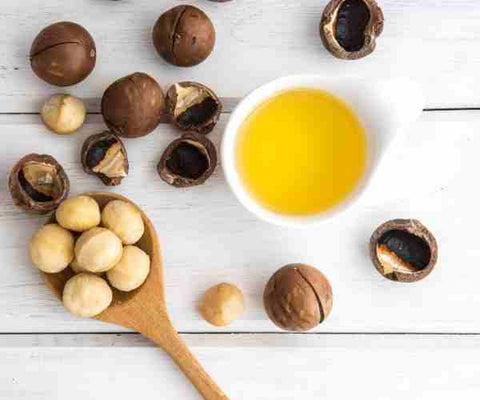
Right off the bat: macadamia oil is not suitable for everyone. The molecules are so large that they do not fit into every hair pore. This means that if you have small-pored, very straight hair, you can skip directly to the next section.
BUT: If your hair is medium- to large-pored, prone to dryness, and probably also curly, then hair serum with macadamia is exactly the right product for you!
What can macadamia oil do?
Macadamia oil moisturizes and enriches your hair with important vitamins and minerals. This is important for healthy hair growth and a beautiful shine.
But that's not all: It also protects against environmental influences and sun radiation! In addition, it regenerates the hair and protects against further damage. This helps effectively against dry, dull hair, even with split ends.
It regulates the sebum production of the scalp and thus ensures that your hair does not get greasy as quickly. At the same time, it ensures full, voluminous hair that looks healthy and beautiful!
Macadamia oil is suitable for you if your hair...
- does not have small pores.
- is dry and dull.
- is damaged or heavily stressed.
- shows a deficiency of water, minerals, and vitamins.
- is prone to split ends or broken ends.
Shea Butter
A little scavenger hunt: Go to the nearest drugstore and find a skin cream that does not contain shea butter. This is not impossible, but you will notice that it is contained in most creams and lotions. And there are good reasons for this: shea butter is another all-rounder in the “care” sector - for both skin and hair.
What can shea butter do?
Shea butter contains allantoin, vitamin E, and omega-3 fatty acids. This makes it extremely rich and nourishes both skin and hair.
Shea butter relaxes the skin tissue and also soothes after sunbathing. It also helps with itching, especially with eczema and rashes. Even psoriasis is said to become more bearable with it!
Scars heal faster and much more inconspicuously if you treat them regularly with shea butter. It also contributes to wound healing, so shea butter prevents wound weeping and promotes cell renewal.
This is especially good to know after a hair transplant, because some procedures create long, thick, bulky scars. By the way, you can learn more about autologous hair transplantation here!
Shea butter is suitable for you if your hair...
- is dry and brittle.
- grows slowly.
- is not supplied with enough nutrients and vitamins.
- and your scalp is stressing you out with irritation and hair loss.
- your head is itchy and red.
- is exposed to a lot of long-term sun exposure.
BY THE WAY: Unrefined shea butter is rather yellowish, sometimes with a slight green tint. Refined shea butter is pure white - in this form, it is industrially processed. But the unrefined form is much better for your body because it contains more natural nutrients. It also absorbs into the skin faster than refined shea butter - and it leaves no greasy film! If you want to use pure shea butter, you should therefore pay close attention to the color.
You can find even more information about shea butter here!
Plant Extracts
Plant-based active ingredients are a great thing. There are several reasons:
- They are mostly natural products. This makes them very well tolerated and also suitable for allergy sufferers and pregnant women.
- They are mostly made without animal testing - and are therefore vegan. So you are not only doing something good for your hair, but also for the environment.
- Because they are not synthetically produced, the environmental impact during the production of the active ingredient is low.
- Essential oils in particular provide a pleasant, natural scent for the hair serum without having to add artificial fragrances or perfumes.
- There are countless plants and therefore a wide range of active ingredients and extracts that are suitable for a wide variety of purposes. There is surely something in there for you too! If you want to find out which plant-based active ingredients are available for hair and which ones are right for you, take a look at the following overview!
Ginger
Ginger extracts come mainly from the root, usually in the form of concentrates, oil, or vinegar.
Ginger has antibiotic and immune-stimulating effects, which means it supports your defenses. It also contains antioxidant active ingredients that prevent skin aging and gray hair.
Maybe you have eaten ginger before, for example, it is often served with sushi. Then you may have noticed that it tastes spicy. Ginger stimulates blood circulation and stimulates the nerve endings. But it also has this effect on the head! This creates a warming effect and at the same time nourishes the scalp and hair roots better with nutrients.

Ginger stimulates hair growth by stimulating the roots. It also has a prophylactic (preventative) effect against hair loss. You can also use hair serum with ginger if you are prone to oily hair. Ginger regulates the sebum production of your scalp.
You should be careful if you have very sensitive scalp and are prone to itching, redness, or even diseases such as neurodermatitis or psoriasis. In that case, ginger can have an overstimulating effect and further intensify your symptoms.
Chamomile
As a tea, chamomile is a popular remedy for nausea and vomiting. This is due to its calming properties. But hair serum with chamomile extract is also highly versatile on the head.
Chamomile inhibits inflammation, relieves irritated areas noticeable through redness, itching, and dandruff, and soothes the skin and hair. You can even use chamomile extract for eczema without having to expect unpleasant side effects!
The cleansing effect of chamomile makes it a great addition to shampoo. This cleanses your scalp down to the deep layers and allows you to effectively combat dandruff formation.
As an addition to care, chamomile also provides shine and lightens your hair a little. Especially in combination with a lot of sun, this can influence your hair color.
Chamomile is very well tolerated. But you should still check beforehand if you might react sensitively or allergically to it before using hair serum with chamomile.
Calendula

Calendulas are real multi-talents: They beautify your garden, provide yellow dye for butter and cheese, and have been of great importance as medicinal plants for hundreds of years. So it is only logical that they can also be useful on your head!
Is your hair lacking moisture, or is it dull and lifeless?
Then hair serum with calendula extract is exactly right for you!
Because: It regulates the moisture balance of the hair, thus helping to combat dryness and regenerates the hair root. It can also care for stressed, tired hair and thus provide shine and suppleness.
Calendulas were already used in the Middle Ages for complaints about the eyes and teeth. This is because they inhibit inflammation and ensure that tissue regenerates faster (i.e., wounds also heal better). Calendula extract also effectively soothes dandruff, itching, and red scalp, thus relieving an unpleasant feeling on the head.
BY THE WAY: Calendula even helps with more serious health problems: acne and boils can be alleviated by it, and mycoses (diseases caused by fungi) and eczema can be kept at bay, as well as psoriasis (for example on the scalp). Calendula can even have an antitumor effect (against tumors)!
Rosemary
Rosemary is a popular spice in the kitchen, which, for example, goes great with potatoes. It gives every dish its own unique note and brings flavor to the plate. Just as versatile as in the kitchen, you can also use rosemary on your head!
Thick, greasy hair and hair prone to falling out benefit especially from hair serum with rosemary. The active ingredients may be added in the form of extract, leaf oil, or rosemary water, and therefore vary in concentration.
Rosemary stimulates the blood circulation in the scalp, thereby ensuring a better metabolism in the hair root, accelerating the supply of nutrients to the hair, and thus also promoting improved hair growth. It also actively prevents your hair from turning gray or falling out.
At the same time, it reduces sebum production, which means your scalp gets greasy more slowly. This provides lightness and volume. Your hair is also much easier to comb and style.
The result of hair serum with rosemary is strengthened hair with a healthy shine that is very easy to comb!
Basil
Have you ever eaten tomatoes with mozzarella? Traditionally, a splash of olive oil, a pinch of salt, and a fresh basil leaf are added. Dried basil is also a staple in every kitchen!
On the head, hair serum with rezilin (basil extract) also does a lot. It ensures that your hair grows back fuller and faster by increasing blood circulation and the moisture content of the scalp.
This effectively wakes up “dormant” hair roots.
Nettle
What is the first thing you think of when you hear the word “nettle”? The unpleasant itching when you accidentally touch a plant, or perhaps the pleasant, characteristic taste of nettle tea or soup?
Hair serum with nettle, however, does not cause burning. Rather, it effectively helps to get rid of excess sebum (so your roots don’t get greasy), dandruff, and hair loss. It stimulates your hair roots to grow hair faster, which can lead to thick, full hair in the long term.
Nettle extract can also have nourishing effects on your hair:
- intense shine
- strengthening and regeneration
- smoothing of the hair structure
- more elasticity and resilience
BY THE WAY: Did you know that the burning sensation on the skin is caused by the tiny hairs on the leaves? They release a skin-irritating fluid. But you can protect yourself by wearing gloves when handling the plant, or by only touching the stem—there are no hairs there!
Or you can toughen yourself up against nettles and become resistant. All you have to do is touch nettles very, very often. Eventually, the fluid will no longer cause a skin reaction, and therefore no burning sensation. But is it worth it? ;-)
Birch
Birch water is a popular product in naturopathy and alternative medicine. It is a decoction in which certain parts of the tree are boiled and allowed to steep. This preserves valuable components and puts them into a universally usable form.
Birch water is like a cocktail: It contains a wide range of minerals, nutrients, trace elements, and vitamins! Birch hair serum strengthens your hair, effectively protects against damage, nourishes, and regenerates. It is therefore particularly well suited for thin, stressed hair!
In addition, birch water is very refreshing! You should definitely try it in the summer.
Aloe Vera

Aloe vera is a versatile plant with countless uses. For example, you can use the gel inside its leaves:
- on scrapes, scratches, and minor skin wounds
- to soothe and relieve irritated and inflamed areas
- on fresh tattoos and to care for healed tattoos
- as a drink, alone or mixed with fruit juice
- to care for skin, hair, nails, and lips
- after sunbathing and on (mild) sunburn
So, are you already on your way to becoming a gardener? ;-)
You can easily grow aloe vera in your home or garden! This way, you will always have fresh leaves on hand when you need them.
Some beauty salons, especially in East Asia, now also offer facial treatments with fresh aloe vera gel. After your skin has been cleansed, you receive a long, intensive massage with gel freshly extracted from an aloe vera leaf. After the treatment, your skin is so well supplied with moisture and nutrients that it looks healthy and radiant.
The treatment is also possible on the neck, décolletage, and shoulders. You can achieve similar results on your hair. You can use aloe vera gel on its own or as an aloe vera hair serum.
The pure gel takes a little getting used to at first because it has a rather thick, slimy consistency. The serum, on the other hand, does not have quite as high an active ingredient concentration—but it may contain other substances that you won't find in pure aloe vera gel!
And what exactly happens when this stuff gets on your head?
- Aloe vera supplies your hair and scalp with extremely high levels of moisture.
- Inflammation and irritated areas are soothed.
- Scar tissue can be softened by aloe vera, preventing thick lumps from forming.
- It regenerates and protects stressed, damaged hair.
- Aloe vera is a rich source of nutrients, proteins, and many vitamins.
- When used regularly, your hair gets a great shine and a lot of volume!
But beware: You should not use aloe vera gel according to the “more is better” principle. After a certain point, your hair will look dull and weighed down. It is best to use aloe vera gel only 1–2 times a week as a treatment for 15 minutes or as an addition to your conditioner!
Allantoin
Allantoin is a breakdown product of the uric acid metabolic cycle. But don't worry, it's nothing disgusting—it can actually do your hair a lot of good! It is also often found in shower gel, sunscreen, and even toothpaste—take a look next time you're in the bathroom to see if you might already be using allantoin.
What can allantoin do for your hair?
- It activates cell renewal, thereby promoting a healthy, strong scalp and faster hair growth.
- Because allantoin is an antioxidant, it helps prevent gray hair, hair loss, and skin aging (i.e., wrinkles).
- Allantoin helps remove necrotic (dead) tissue, thereby creating more room for new cells. This stimulates hair growth and the regeneration of your scalp.
- Hair serum with allantoin also moisturizes and relieves itching and redness.
Please note that allantoin is only suitable for external use. People with very sensitive skin or a tendency toward allergies should test the hair serum with allantoin on a small area, as extreme sensitivity of your skin cannot be completely ruled out.
BY THE WAY: Allantoin is also found in medicines—specifically in ointments and creams. It helps other active ingredients penetrate deeper skin layers and also accelerates this process. This achieves a better effect at the same active ingredient concentration!
Glycerin

Almost every skincare product contains glycerin. It is a polyol, but unlike ethanol (regular drinking alcohol), it does not dry out the skin.
Glycerin binds moisture, preventing the product and your skin from drying out. It also provides more elasticity and protects against surfactants.
The problem is how the substance is obtained. Glycerin is mostly obtained from petroleum, often also from animal fats. This puts an enormous strain on the environment, which is why you should think carefully about whether you really need a product containing glycerin.
In large quantities or with prolonged use, it also dries out your skin, especially in dry air. This is why it is now recommended that you avoid glycerin as much as possible and switch to natural products that have a similar effect.
Aloe vera, for example, has the same moisturizing effect. You can use any plant oil against dryness, or a hair serum with essential oils! That is good for the environment, and in the long term, also for your skin.
Problematic Ingredients
Have you ever wondered at the drugstore why there are so many skincare products that cost almost nothing and promise miracles?
This is partly because they are stretched as much as possible. And often, these are not ingredients that nourish or are in any way good for the hair. Instead, they are usually either artificial colors and fragrances or chemical additives such as parabens.
In most cases, every ingredient in the hair serum has an effect or benefit. Of course, colorants and fragrances make the product look nice and smell good. Other substances, such as parabens and hormones, have an effect on the body, especially when it comes to hair loss.
Nevertheless, they can have problematic effects on your health, for example:
- by interfering with the body's hormone balance
- affecting your metabolism
- clogging your skin pores or sealing the hair too tightly
- irritating the respiratory tract, such as the trachea and lungs
- putting a strain on or damaging the environment
- triggering stress reactions and allergies
- some (few) substances are suspected of causing cancer (e.g., parabens)
But highly effective concentrates, which are contained in some serums, are sometimes not only good for your hair. You should definitely know the risks, changes, and side effects before you try a hair serum for the first time.
How do I use hair serum?
Application (general)
Depending on which product you use, the application varies. However, you can generally remember these tips:
- Use sparingly! Hair serum is a concentrate of active ingredients. Too much of a good thing will only make your hair heavy, greasy, and flat—without achieving any additional effect.
- As with washing your hair: Not every day! This only causes a dry scalp, dandruff, and makes your hair get greasy much faster. Ideally: Wash your hair every 2–3 days and use the hair serum immediately afterward.
- The ideal application time naturally varies from serum to serum. BUT: Normally, a great compromise is to apply the product to your hair in the evening, leave it on overnight and rinse it out in the morning! This nourishes your hair and gives the serum time to penetrate your hair and release its effects. This way, it does not make your roots greasy, so you can leave the house perfectly styled in the morning.
- Where you use the product is usually in the name: scalp or hair serum. If you want to care for your lengths and ends, take enough product in your hands, rub it together briefly, and work it into the hair from the bottom up. This way, your roots retain their volume, and you get the full nourishing effect in the ends! A scalp serum, on the other hand, is applied directly to the head and massaged in.
Combination with other hair care products
You get the optimal nourishing effect by regularly using:
- shampoo
- conditioner
- treatment or mask
- serum
Which of these products you use depends on your own judgment. What makes you feel clean, nourished, and above all, comfortable? Which products are suitable for your hair type, smell pleasant, and help you avoid walking around like an oil well after two hours? ;-)
Just keep in mind: conditioner, treatment, and mask are different products that all have positive nourishing effects, but differ completely in their mode of action and type. Hair serum also replaces neither conditioners nor masks!

Hair serum—where to buy?
Drugstore
Like most people, you will also immediately think of the usual drugstores when it comes to hair care, right?
Of course, they have everything your hair needs. From shampoo to treatments, as well as color and styling products. But can you also buy hair serum there?
Yes! However, you should carefully check which product you are buying. Not only should it be suitable for your hair, but also of good quality. Drugstore products are usually on the affordable side, but they often have the unpleasant side effect of... having no effect.
So it is best to research your chosen product online beforehand to make sure that nothing happens. Of course, opinions will always differ, but if the general tone online is negative, it is advisable to switch to a different product that may cost a little more. Then the effect will be there, and you won't be annoyed in the bathroom afterward that your hair looks the same as before.
Perfume store
The alternative to the drugstore is the perfume store. Especially if you only want to let high-quality luxury products touch your hair, you probably shouldn't reach for the five-euro serums.
But keep in mind that there are brands that maintain a high-quality image and cost a lot of money, but whose ingredients are exactly the same as those in the drugstore. So here too, be sure to check whether the hair serum is worth the price!
Pharmacy
Especially medical products with highly effective ingredients should definitely be bought in a pharmacy. There you not only get a safe remedy that you can use without worry. You can also get comprehensive information and advice on what the right product is for your hair (and your wallet).
The downside is that products from the pharmacy are often a little more expensive than, for example, those from the drugstore. But they often work faster and better, which can even save money in the long run.
However, you should definitely discuss particularly serious problems with your hair with a doctor. Especially in cases of hair loss caused by medication or illness, it is important that you choose a product that can really help you. Because some active ingredients interact with each other and thus cause unpleasant side effects.
Do-it-yourself (DIY)

Like almost every cosmetic product, there is also DIY hair serum. But before you turn your kitchen into a hair serum laboratory, you should realize that DIY hair serum always works less effectively than a store-bought one. This means that you will never achieve as high an active ingredient concentration as industrially manufactured hair serum. Simply because you surely do not have the same technical facilities at home as companies that specialize in the production of hair serum. But if you are going to mix a nourishing hair serum anyway, then be sure to keep reading to find out how!
The basic mixture is always essentially the same: The base is a herbal oil, which you can simply buy at the drugstore, for example.
You then add various additives to this oil, which then achieve different effects.
For example, these can be essential oils, or one of the active ingredients you learned more about above. Lavender oil, vitamin E, and various medicinal herbs are popular.
Make sure that the active ingredients suit your hair and really achieve what you want. For example, you should not add more oil to greasy hair.
You can find recipes for DIY hair serum here!
Does hair serum actually work?
The most important question you are sure to ask yourself before using a new product is surely: Does it even work?
That makes sense, after all, no one wants to throw money away. But there is almost never a uniform answer to that. All people are different, and so is their hair. That is why you will find that there are products that are suitable for your hair type, but work much better on someone else than on you.
After all, it is not only the hair serum with its ingredients that is responsible for the effect, but also many other factors, for example:
- Environmental influences such as UV radiation and climate
- Metabolism
- Diet
- Stress, psychological factors and sleep
- Alcohol, cigarettes and drug use
You will therefore have to test every hair serum to know how well it works.
But of course, you can increase the likelihood that the hair serum shows an effect. Pay attention to what ingredients are in it and also to their purity and quality.
Was the product manufactured in China? Are special ingredients listed?
You can also research at what concentrations the respective substance is best for your hair and can unleash its full effect. Chemical additives, for example, must be in a certain percentage in the hair serum to work well. You can very easily compare this with the information on the bottle.
There is also a lot of information on the internet and in the specialist literature about the composition of different active ingredients as well as their interactions.
Another source that achieves very meaningful results is Stiftung Warentest.
But basically, you should know that there are hardly any tests with hair serums. Hair growth products, such as Thiocyn hair serum, are considered controversial. That means ultimately that you really have to try it yourself to determine whether it works for you or not.
Is there an alternative to hair serum?
If you don't feel like doing that, but still want full and beautiful hair, there is still an alternative that has nothing to do with care products: Streuhaar!
You simply apply it in the morning, for example after showering. Thanks to the built-in sieve or the applicator specially developed for this purpose, it is child's play to apply it anywhere on the head. Sealed with hair or fixing spray, it holds rock-solid all day long!

This way, you create the impression that your bald spots, your thinning hair or your visible scalp have practically disappeared overnight. For the hairline, temples and temple areas, there is also root powder. You apply this like a concealer, preferably with the included sponge.
This way, you also visually fill in gaps without it looking made up or painted on. Naturally beautiful hair, very simply and in no time. Now you surely want to know more, right? Then just click here!