
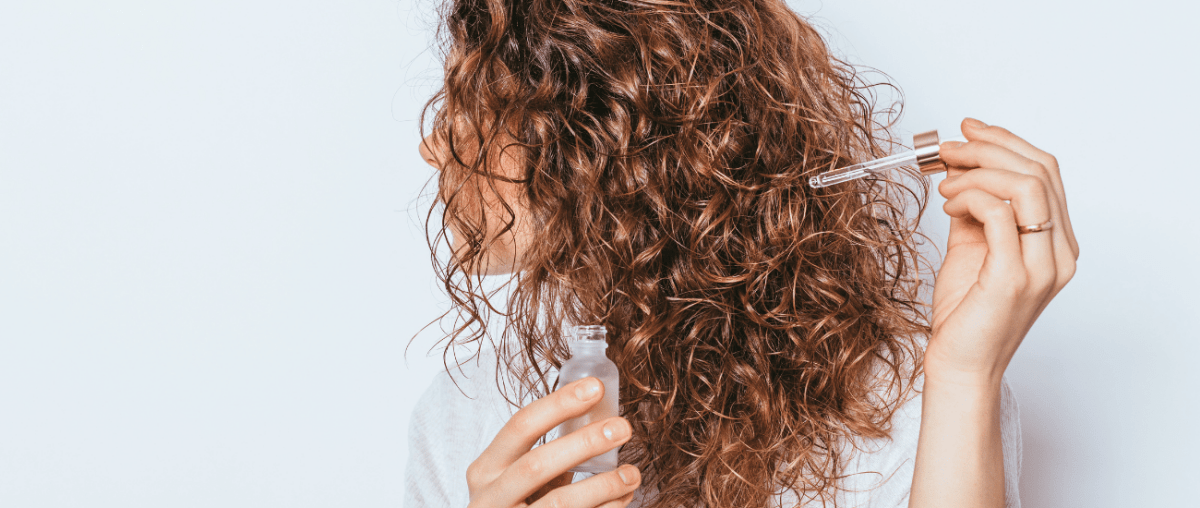
Thick hair is primarily a matter of subjective assessment, because although concrete guidelines apply in the cosmetics industry, no one measures the diameter of their hair. It is also hardly possible with standard measuring instruments, after all, our hair is less than a millimeter thick.
Instead, we pay attention to other factors: How much natural volume does my hair have? How thick is the ponytail when I tie up my long hair? How does my hairline feel when I run my fingers through it? Is my hair texture straight or curly and how much does my hair tend to frizz? To get thicker hair, it is helpful to first strengthen the hair roots.
If the hair roots are well supplied, the hair grows back healthy – the basic prerequisite for thick hairstyles. Whether we have fine or thick hair depends primarily on hereditary predisposition. But there are some tricks with which you can get more volume and thicker hair.
BY THE WAY: According to valid values, a normal hair has a diameter of 0.06-0.07 millimeters. For fine hair, it is supposed to be 0.04-0.05 millimeters, for a thick hair structure approx. 0.08 millimeters.
Thicker hair with the right care
If we want to strengthen the hair roots and take care of our hair, we should start with our daily care. We brush and style our hair daily and wash it regularly. Therefore, it is important to avoid mistakes that damage the hair structure by being repeated constantly.
Washing hair correctly

First, it is recommended to use a mild shampoo that is as free of silicones as possible. Although silicones provide a beautiful shine in the short term, they stand in the way of volume, because they weigh down the hair. In addition, they burden our groundwater, which represents a significant disadvantage for the environment and our health in the long term. Deep-cleansing shampoos are too harsh for continuous use and can dry out the scalp.
Alternatives are care products from natural cosmetics manufacturers or hair soaps from the organic shop. Some people even swear by cleaning their hair completely without shampoo: for example with rye flour and Lavaerde.
The hair should under no circumstances be washed with water hotter than 40°C. It is worth rinsing the hair with cold water once before getting out of the shower.
To dry, you should not wring out the hair or rub it too roughly, but rather pat it dry with a towel. Microfiber towels are particularly gentle and bring the pleasant side effect that they dry faster than terry towels.
It is enough to wash the hair every two to three days. If the sebum, which acts as a natural care layer on the hairline, is removed daily, there is a risk that the natural refatting of the scalp gets out of balance.
Hot blow-drying and straightening strain the hair, therefore it is advisable to let it air dry more often after washing or to set a cool temperature on the blow dryer. A heat protector helps to protect the hair even when using a flat iron and curling iron. Furthermore, curls and waves can be created without heat through curling irons or braids.
Dyeing hair?

Bleaching and chemical dyes damage the hair by "breaking" it, extracting its own dyes and replacing them. Anyone who wants to strengthen their hair roots and longs for thick hair should spare themselves this strain.
Natural shades can be produced with Henna . Anyone who does not want to give up the usual coloring at all can try highlights once. Highlights are contouring for the hair and make it look visually denser and fuller.
Brushing, brushing, brushing...
Based on an old folk wisdom, many beauty bloggers recommend combing long hair with approx. 100 brush strokes per day. But you don't have to spend hours in the bathroom. 100 brush strokes daily would strain the hair too much and provoke hair breakage, therefore: Not so much on the number, but pay attention to how you brush.
Gentle, even brush strokes that are carried out continuously from the hairline to the ends are effective. The idea is that the sebum is distributed from the scalp into the lengths. This prevents dry ends and hair breakage. By taking the sebum from the roots, the hair does not get greasy as quickly. At the same time, the scalp receives a blood-promoting massage.
To distribute the sebum, brushes made of dense natural bristles prove themselves. Tip for natural curls: It is best to detangle the hair beforehand with a wide-tooth comb.
Hairstyles that make fine hair look thicker

Short and medium-length hairstyles are advantageous for fine hair that has enough density. Bob, Long Bob or Pixie Cut are currently very popular and help women with fine hair to show their best side.
For long hair, at least the ends should be cut regularly so that split ends, hair breakage and thin ends have no chance.
Long, thick hair is the highly coveted dream, but the natural predisposition does not play along? Hair extensions are glued to the real hair and immediately lengthen the hairstyle.
Clip-In Extensions are gentler and more affordable. These are hairpieces that can be placed invisibly in the hair when needed and also taken out again.
For short hair or to specifically cover sparse areas, extensions are not suitable. For that, there is Streuhaar, which is characterized by its playfully easy application and is also much cheaper than a hair extension.
Reading tip: Hair thickening - The best methods at a glance
For men with fine hair, short hairstyles are also best, but the stylist should make sure that the cut thins out as little as possible on the top of the head. While the hair in the neck area can be shaved very short, everything above the forehead should be left as voluminous and thick as possible.
Styling tip: With hair powder, the hair looks thicker, becomes grippier and stays in shape longer. With a well-groomed beard – it does not necessarily have to be a full beard, a three-day beard also works – a man can visually compensate for fine hair.
Hair treatments for thicker hair
Hair treatments aim to strengthen the hair roots and support a healthy hair structure. The offer of ready-made hair treatments from the cosmetics shelf is almost endless. For every hair problem, there are a thousand care lines. But for thin hair: Less is more.
Hair treatments and conditioners with an ingredient list that reads like the Bible in Old Hebrew can weigh down the hair. A light formula that can be washed out without residue is better.
Natural hair treatments that supply the hair roots with nutrients can be made yourself with simple home remedies.
Make hair masks yourself
Once or twice a week, a rich oil treatment helps, in which the hair is cared for with olive oil, coconut oil or castor oil, for example. Anyone who can temporarily tolerate the smell can use argan oil or neem oil, these are considered particularly effective.

Application: Massage sparingly into the scalp, and if necessary, also distribute into the dry hair ends. Let it work for at least two hours or overnight. Then wash the hair as usual.
Tip: The oil absorbs even better with a little warmth. Simply cover the head with a cap and/or a towel.
Oil-based hair masks can be easily combined with egg yolk and honey for the extra care effect.
Aloe Vera Gel is great to supply the hair with moisture and stimulate growth, while coffee promotes the blood circulation of the scalp through its caffeine content.
Healthy nutrition strengthens the hair roots from within
Eating healthy is the basic prerequisite for thick hair. Deficiencies damage the fullness and structure. Anorexic people therefore often have particularly thin hair. Through poor nutrition, you give away a lot of potential. This is how hair loss due to iron deficiency or vitamin deficiency can occur.
Anyone who is currently on a diet should make sure to take protein-rich food and many vitamins. Dietary supplements can help to strengthen the hair roots, but should only be taken in consultation with the family doctor or dermatologist.
Everyone who wants thicker hair needs these nutrients and trace elements:
Stress hormones inhibit hair growth and disrupt the immune system. Anyone who lives with constant stress can therefore not expect a shiny volume. What good is the most beautiful, most powerful mane after all, if you don't find the time to enjoy it?
Reading tip: Hair loss due to stress
Note: This article contains general information. It is not intended for self-diagnosis and does not replace a doctor's visit!