
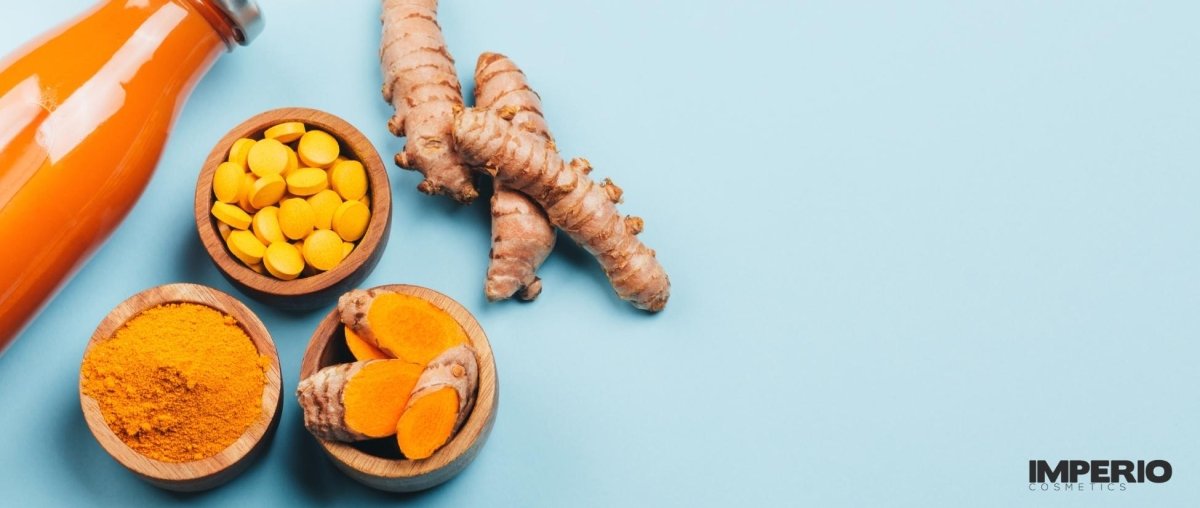
We can't stand to hear the word "superfood" ourselves anymore—fitness gurus have chewed the word out so many times. But if there is one superfood that really deserves the name, it's turmeric—the root is effective against all conditions associated with inflammation, because turmeric is anti-inflammatory, antioxidant, and antiallergic.
In addition, yellow ginger boosts your metabolism. It is even said to help against hair loss.
What's the deal with the hype around turmeric? Does the yellow root really have so many wonderful benefits, or are there also side effects? And what we are particularly interested in: To what extent is turmeric effective against hair loss?

Turmeric: The Miracle Weapon
In Ayurvedic medicine, turmeric has been used for thousands of years, and as a spice, it holds a place of honor in India. In a traditional Indian wedding ritual, the bride is rubbed with a paste of turmeric, sandalwood powder, oil, and other spices the day before the wedding. This not only gives her a radiant complexion but is also said to cleanse her aura and ward off evil spirits.
It has been scientifically proven that turmeric fights inflammation and also protects against free radicals. This slows down the aging process, strengthens overall health, and incidentally gives you beautiful skin and strong hair. It is no coincidence that women in India have the most beautiful and healthiest hair in the world.
But turmeric's influence on beauty is actually just a positive side effect.
Numerous studies show that turmeric can effectively support the treatment of serious diseases such as Alzheimer's, osteoarthritis, and cancer. So, by taking turmeric regularly, you can do something for your health as a preventive measure.
By regulating blood sugar, lowering cholesterol levels, and stimulating fat metabolism, turmeric helps combat obesity and all the associated ailments. The risk of developing diabetes decreases significantly thanks to turmeric's positive effects.
Studies also show that turmeric has a mood-lifting effect and can even help alleviate severe depression. If that isn't reason enough to give it the title of superfood!
Does turmeric help against hair loss?
First of all: There is no remedy in this world that everyone can swallow and—presto!—hair loss is gone. Our organism is far too complex for that. The cause of hair loss is individually different for everyone. Yes, the miracle root can help against hair loss if turmeric is effective against the trigger of your personal hair problems.

Turmeric against stress-induced hair loss
When you are exposed to stress or other emotional strain, your body releases stress hormones. These hormones cause your blood pressure to rise, more sugar to be released—which is why you are more likely to experience cravings during stressful times—and your muscles to tense up.
Your body means well: It wants you to be able to devote all your strength to solving an urgent problem. That is why it draws energy from other processes, such as digestion or hair growth, for the duration of the stressful situation.
The result is gastrointestinal problems, weight gain, pale skin, dry hair, and hair loss. On top of that, you get tired more quickly and are more susceptible to infectious diseases.
Turmeric can play several trump cards here. It normalizes your blood pressure and blood sugar levels. This makes it easier for you to stay calm and focused even during stressful times.
It strengthens your immune system so that the next flu season doesn't knock you off your feet. At the same time, it stimulates your digestion, which first saves you unwanted pounds and second protects you from deficiencies that can lead to hair loss.
As a finishing touch, turmeric also lifts your mood and makes you more stress-resistant overall.
Reading tip: Hair loss due to stress

Hair loss as a deficiency
Many important trace elements such as potassium, phosphorus, magnesium, and iron are found in the yellow root.
In addition, as already mentioned, it stimulates your digestion and ensures that all the nutrients you absorb through food are better metabolized by the body.
Turmeric promotes blood circulation, which is very important for your hair. This is because the blood vessels leading to your hair roots are tiny.
If the scalp is not well supplied with blood, hair health suffers. In this sense, turmeric reduces the risk of hair loss.
Turmeric's effect on alopecia areata
In alopecia areata, the immune system attacks the body's own hair follicles as if they were pathogens. How this overreaction occurs has not yet been conclusively clarified.
Scientists have, however, been able to show that alopecia areata is often associated with an increased susceptibility to allergies. Furthermore, alopecia areata is accompanied by inflammation under the skin.
So there are two approaches for our miracle weapon turmeric: It combats the underlying inflammation and has a balancing effect on the immune system. In this way, healing can be accelerated. Turmeric is even said to have a preventive effect against allergies and alopecia areata.
Does turmeric help with hereditary hair loss?
In people who suffer from hereditary hair loss, the hair follicles react particularly sensitively to the hormone dihydrotestosterone (DHT).
Under the influence of the hormone, the hair roots shrink. Turmeric cannot do much against this in the long term. But it promotes blood circulation in the scalp and counteracts oxidative stress. In this way, it can delay hereditary hair loss.
Reading tip: Hereditary hair loss
Using turmeric correctly—but deliciously!
Turmeric achieves its maximum effectiveness when we take it orally. It is enough to actively incorporate the spice into your cooking and consume it regularly in small amounts.
As a healthy pick-me-up, a turmeric drink, also known as golden milk in India, is ideal. Mix about…
-
1 tsp turmeric powder

- ¼ tsp ginger powder
- 1 pinch of pepper
- 1 knife-tip full of cinnamon
- a little honey or agave syrup if needed
Golden milk is best enjoyed warm, especially in winter. In summer, you can spruce up the recipe with ice cubes and add banana puree or coconut milk to taste. Yum!
For a turmeric cure, capsules containing an effectively dosed amount of turmeric powder are a viable option as a dietary supplement. When purchasing, it is best to make sure that it is an organically produced product so that the pollutant load remains as low as possible.

Turmeric's effect as a mask
If you want clearer skin and fuller hair, you can also use turmeric externally as a mask.
Mix turmeric powder with honey and yogurt. If the mask is to be vegan, use a little chickpea flour or bentonite clay instead and mix the whole thing with lukewarm water or coconut oil.
The mask cleanses your skin, prevents pimples and blackheads, and inhibits inflammation.
Those affected by alopecia areata can apply the turmeric mixture directly to the affected areas.
If you have particularly fair skin, you should not leave the mask on visible areas, such as your face, for longer than 10 minutes. The curcumin contained in the root has a coloring effect. Therefore, it is best to wear an old T-shirt while wearing the mask and remove any spots on light-colored bathroom surfaces immediately.
If your skin has a slightly darker undertone, you can leave the mask on longer. Darker skin types can comfortably extend the application time to up to 40 minutes.
Make sure that the mask does not dry out, but retains a little moisture; this way, the ingredients can penetrate better. The curcumin also gives your skin a warm, golden complexion.
Tip: If the mask does end up coloring your skin more than you would like, the best way to remove the yellow tint is with a little oil and a cotton pad.
Does turmeric have side effects?
Although the risk of turmeric causing side effects is extremely low, it should nevertheless be mentioned.
If you have a sensitive stomach, you should first test how turmeric suits you in small amounts and be careful with turmeric capsules. Especially in overdoses (from approx. 8–12 g), irritation of the stomach lining can occur. The same applies to people who suffer from stomach ulcers or acute gastritis.
Patients with the rare disease TTP (TTP = thrombocytopenic purpura) should generally avoid turmeric. In individual cases, it has even led to life-threatening side effects.
If you take medication regularly, please check with your doctor before taking turmeric preparations whether there may be any adverse interactions.

We love turmeric for a reason…
We have been convinced by the wonderful effect turmeric has on serious illnesses and the unbeatable benefits it brings to our beauty care. We can even send turmeric into battle against hair loss!
If you are now just as enthusiastic as we are and are about to get the turmeric powder out of the kitchen cupboard, remember: It is more effective to take smaller doses regularly than to devour half a block at once with high motivation. 😉
Be creative and let yourself be inspired by new recipes.
Have you already integrated turmeric into your beauty and dietary habits? We would love to hear your favorite recipe and how you use yellow ginger for your skin and hair. We are excited to hear about your experiences!